Acrobatics for Dancers
Safe, structured training in strength, flexibility, balance, and acrobatic skills, developed specifically for dancers and integrated with choreography.
Acrobatics Built for Dancers
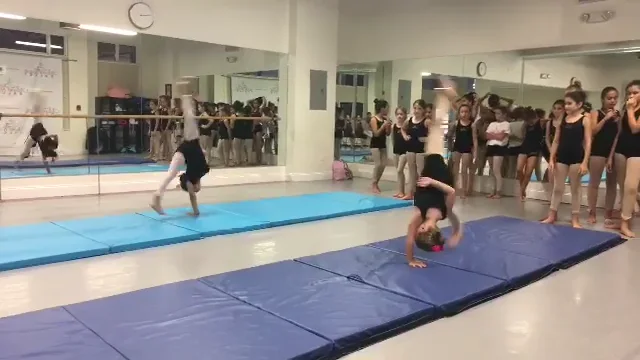
Acrobatics at Miami Royal Ballet is taught within a dance context. Unlike competitive gymnastics, our acrobatics program focuses on skills that flow naturally into choreography: transitions from standing to floor, controlled backbends, clean handstands, and acrobatic elements that become performance tools rather than isolated tricks.
Safety and proper technique are the foundation of every progression. Students do not attempt more advanced skills until the strength, flexibility, and control required to perform them safely and cleanly are in place.
Our acrobatics students develop remarkable body strength, spatial awareness, and physical confidence that benefits their overall dancing as well as their acrobatic development.
Safe Skill Progression
Skills are introduced in a structured sequence. Students advance when strength and technique are ready, not before.
Strength and Flexibility
Core strength, hamstring flexibility, shoulder strength, and the overall body conditioning that makes acrobatic skills safe and sustainable.
Balance and Coordination
Controlled static balances, one-leg holds, and partner-assisted positions that build spatial awareness and body control.
Forward and Backward Rolls
Clean, properly protected rolls with correct head, neck, and spine placement, the foundational floor skill for all further development.
Cartwheels and Round-Offs
Precise technique for cartwheels and connected round-offs, with correct shoulder and hip alignment and safe landings.
Handstands
Building toward a clean, fully vertical handstand with properly set shoulders, active core, and controlled entry and exit.
Backbends and Walkovers
Spinal flexibility and back-arching skills progressed safely from bridge work through increasingly dynamic walkovers when ready.
Personal Attention and Private Training
For students who want focused skill development outside of the group class, Private Acro is available on Sundays by appointment only, with other times depending on faculty schedules. One-on-one instruction accelerates progress on specific skills and ensures technique is correct before patterns become habits.
Learn about Private Lessons →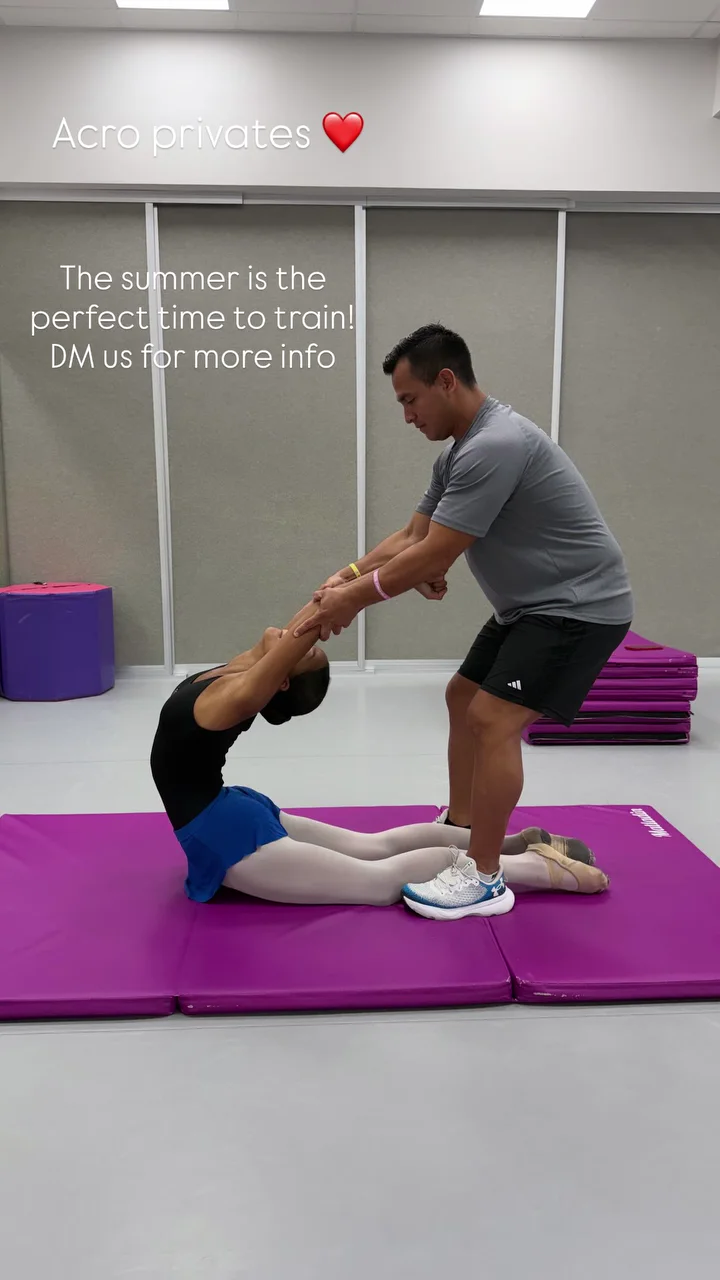
Acrobatics Schedule
Acrobatics FAQs
How can ballet and dance support a child's physical and mental development?
When practiced consistently and attentively, age-appropriate ballet and dance can support physical conditioning, coordination, posture, strength, musicality, body awareness, and healthy movement habits. Focused muscular engagement and careful repetition also give children opportunities to develop concentration, responsibility, discipline, resilience, patience, and follow-through. As training progresses and becomes more demanding, meaningful improvement generally requires focused, consistent work. Progress varies by student and depends on factors such as attendance, readiness, effort, instruction, and wellbeing; no specific outcome is guaranteed.
What if my child is not absolutely loving every class?
Ballet is a discipline and a growth process, so not every class will feel easy or immediately fun. It is normal for dancers to move through challenging periods as coordination, expectations, and confidence develop. Consistent attendance and age-appropriate follow-through can help children build resilience, responsibility, confidence, and the ability to persist, but every child and family is different. Parents ultimately decide which commitments are right for their child while considering the dancer's feelings, wellbeing, and circumstances. MRB faculty give respectful, thoughtful feedback with each student's best interests in mind and welcome conversations with families about concerns, progress, and the most constructive path forward. Our goal is to help each dancer grow without suggesting that one path is right for everyone or that a child's wellbeing should be dismissed.
Where can we park?
There is usually plenty of street parking. Merrick Park offers a 15-minute child drop-off and pick-up window; normal parking rules and fees apply beyond that window.
Do students have opportunities to perform?
Yes. Miami Royal Ballet presents recitals, performances, competitions, community appearances, and special events throughout the year. Opportunities vary by program, age, placement, and readiness, and our faculty will explain the experiences available to each dancer.
What schedule and commitment should families expect?
Schedules and recommended weekly commitment vary by program, age, level, goals, and placement. Consistent attendance supports progress. After a trial and faculty recommendation, our team will explain the current schedule, availability, season commitment, and registration steps before your family enrolls.
What should the dancer wear to a trial class?
Wear tights if available; otherwise, shorts and a comfortable shirt work well. Ballet slippers or ballet shoes are preferred, but socks work if you do not have them yet. The required uniform is sold at the studio after enrollment.
How does enrollment work after a trial class?
After the trial, our faculty confirms the recommended placement and the studio team reviews current availability with your family. When the dancer is ready to enroll for the full season, you can complete registration for the approved class. Placement and space are confirmed directly by the studio.
What age is Acrobatics for?
Our acrobatics classes currently serve elementary-age students and intermediate-level dancers. Please note your dancer's age and current dance background when requesting a trial so our team can recommend the right class.
Is Acrobatics the same as gymnastics?
No. Acrobatics for dancers is taught within a dance context, focusing on skills that integrate smoothly with choreography. The emphasis is on controlled, fluid technique rather than competitive gymnastics.
Is acrobatics safe for children?
Safety is our highest priority. Progressions are structured carefully, and students do not advance to more complex skills until foundational strength and technique are secure. Teachers supervise all skill work.
Do I need to already dance to take Acrobatics?
A dance background is helpful. Many of our acrobatics students are already enrolled in ballet or another program. Our team will advise on placement when you request a trial.
What will my child learn to do?
Skills are introduced in progression according to each student's strength and readiness. Early skills include cartwheels, forward rolls, backbends, and handstands. Students progress to more advanced elements as they develop the strength and control required.
Request an Acrobatics Trial Class
Submit your information and our team will contact you with available class times and placement guidance.
Already completed your trial and received placement? Register here.