


A Day in the Life at Miami Royal Ballet & Dance
- Miami Royal Ballet
- 4 days ago
- 5 min read


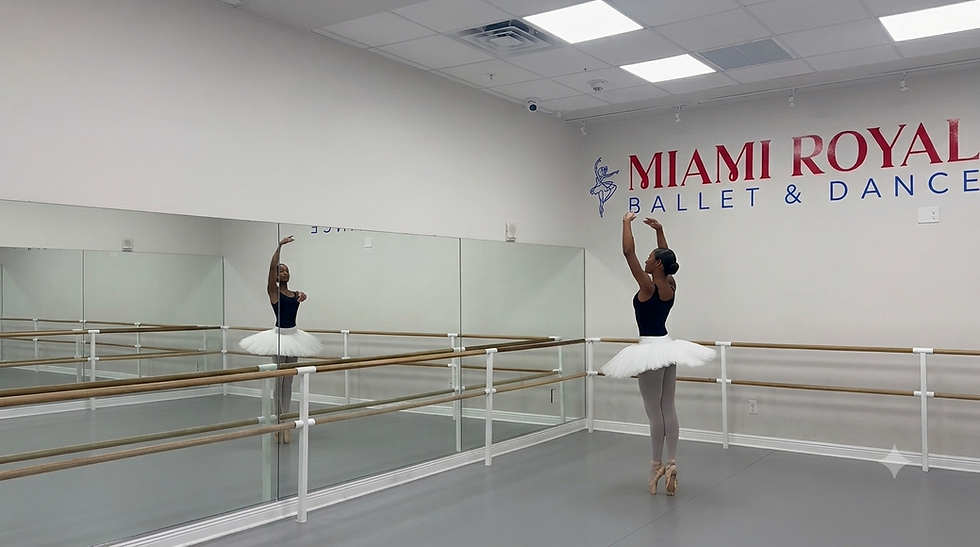
You walk into the studio before the sun is even up. The lights are soft. The floor is quiet. Then the music starts, and the day begins.
Students tie their pink and black shoes, stretch their leg muscles, and prepare for a full day of movement. The Miami Royal Ballet offers to build solid life habits through daily training, professional guidance, and artistic growth.
A standard daily schedule balances traditional ballet technique, diverse cross-training, and team rehearsals. Students build physical discipline, mental focus, and personal poise from early morning to late evening hours.
In short, a day at Miami Royal Ballet & Dance in Coral Gables is packed. Dancers train hard. They learn new skills. They grow stronger, hour by hour. If you have ever wondered what really happens behind those studio doors, let us walk you through it, step by step.
Why a Day at the Miami Royal Ballet Studio Looks the Way It Does
Ballet is not just one class. It is a full schedule built around real goals. Every session has a purpose. Every hour builds on the last one.
Young dancers, adult beginners, and advanced students all move through the same building, but their days look different. Some come for early morning classes. Some train after school. Some spend evenings preparing for a big show. The studio runs like a well-built routine, and that routine is what turns beginners into strong dancers.
Morning and Daytime Routine
The morning sets the tone for the whole day. The studio day begins early with quiet concentration. Instructors watch every student and give clear physical corrections. Here is how the morning begins in the studio.
Early Classes Build the Basics
Mornings often start with focused technique classes. Dancers work on core positions. They check their balance. They fix their alignment. This is slow, careful work. It is not flashy, but it matters most.
Adults who train early often say the same thing. Their mind feels clear. Their body feels ready. Starting the day at the barre changes how the rest of the day feels.
Academy and Camp Programs Keep Kids Moving
During the day, the studio also runs full academy schedules. Younger children have age-appropriate classes. Homeschool families follow a structured dance curriculum built around their school day. During busy seasons, the studio adds camp tracks too.
This means a parent can drop off a child in the morning and know exactly what that child will learn that day.
Cross-Training Builds Well-Rounded Dancers
Dancers do not just study classical ballet. They also train in contemporary, modern, jazz, lyrical, and acrobatics. Each style teaches something different.
Jazz builds sharp energy. Contemporary builds emotional expression. Acrobatics builds strength and control. Together, these styles make a dancer more complete. A student who only knows one style hits a ceiling fast. A student who trains across styles keeps growing.
Midday Cross Training and Style Variety
Classical ballet forms the core base of all dance movement. Complete athletic training requires skill across many different dance styles. Midday hours bring high energy and movement variety to the studio floor.
Contemporary and Modern Movement
After basic barre work, dancers change shoes for contemporary and modern classes. These dynamic styles teach smooth floor transitions, emotional expression, and fast weight shifts. Students learn how to fall safely and rise off the floor with speed. Instructors teach dancers how to use gravity, floor tension, and natural breath. Dancers learn to move freely while keeping their core muscles tight. This freedom of movement balances the strict structure of classical ballet.
Jazz, Lyrical, and Acrobatics Training
Dancers also train in sharp jazz movements, flowing lyrical routines, and acrobatic skills. Acrobatics classes build upper body power in wrists, arms, and shoulders. This broad cross-training protects young athletes from overuse injuries and improves overall performance skills.
Fast jazz drills build quick feet and sharp rhythm skills
Lyrical routines help dancers express deep feelings through story
Acrobatics build strong back muscles and safe tumbling habits
Modern dance teaches grounded foot placement and body control
Cross-training builds complete dancers who adapt quickly to any choreography. Students learn to switch from soft classical movements to sharp modern steps with ease.
Afternoon Company and Pre-Professional Rehearsals
When regular academic school hours end, older students arrive for intensive practice sessions. Competitive team members and advanced pre-professional dancers fill the studio rooms for hard physical work.
Refining Leaps, Turns, and Group Choreography
Afternoon training focuses on physical power, height, and speed. Dancers practice high leaps across the floor and fast multiple turns in unison. Instructors count musical rhythms out loud and use video replays to fix minor errors.
Practice high jumps with soft knees on every landing
Turn smoothly on one foot while keeping eyes on one spot
Clean up group spacing so every row looks straight and tidy
Match arm positions across the entire line of dancers
Company dancers repeat complex routines until every step looks effortless and clean. Team members learn to rely on each other for precise timing during group performances. This shared effort builds strong friendships and teamwork skills that last a lifetime.
Specialized Preparation for Shows and Stage Contests
Late afternoon and evening hours bring targeted performance practice. Dancers refine solo routines and group numbers for regional contests, national stages, and classic annual shows like The Nutcracker. Visiting guest instructors hold special workshops to share new dance routines and professional stage tips. Dancers leave the studio in the evening with tired muscles, proud smiles, and growing confidence. Their daily effort inside the studio translates directly into outstanding performance quality under bright stage lights.
What Makes the Day Feel Different Here
A packed schedule only works if the environment supports it. At Miami Royal, every class is led by an experienced instructor who gives real, personal feedback. Groups stay focused. Students are corrected with care, not criticism.
This studio has trained dancers since 2008. That history shows in how classes are run. Nothing feels rushed. Nothing feels careless. Families often stay for years, not because they have to, but because they see steady growth in their child, or in themselves.
A Day Built on Progress, Not Perfection
By the end of the day, dancers have trained hard. They have learned something new. They have pushed past a small fear or fixed a small habit. That is what a real day of Miami Royal Ballet training looks like. It is not glamorous every minute. It is consistent, and consistency is what builds real dancers.
If your child, or you, are curious about what a normal week could look like, the best way to understand it is to see it in person. Step into our dance studios in Miami, FL, watch a class, and picture your own place in that daily rhythm. Some of the best growth starts with simply showing up once.
FAQs
How Long Is a Typical Training Day at the Studio?
It depends on the program. Younger students often train for an hour or two. Company and pre-professional dancers may train across morning, afternoon, and evening sessions.
Do Beginners Train Alongside Advanced Dancers?
No. Classes are grouped by age and skill level, so beginners get the attention they need without feeling rushed.
What Styles of Dance Are Taught Besides Ballet?
Students also train in contemporary, modern, jazz, lyrical, and acrobatics, alongside their classical ballet foundation.
Is There a Class Option for Homeschool Families?
Yes. Daytime programs are built to fit a homeschool schedule, with structured dance curriculum included.
How Often Do Company Dancers Rehearse?
Company and pre-professional dancers rehearse regularly through the week, with extra sessions added closer to a competition or performance.


Comments